
How Matchmaking & Networking Algorithms Power Modern Event Platforms
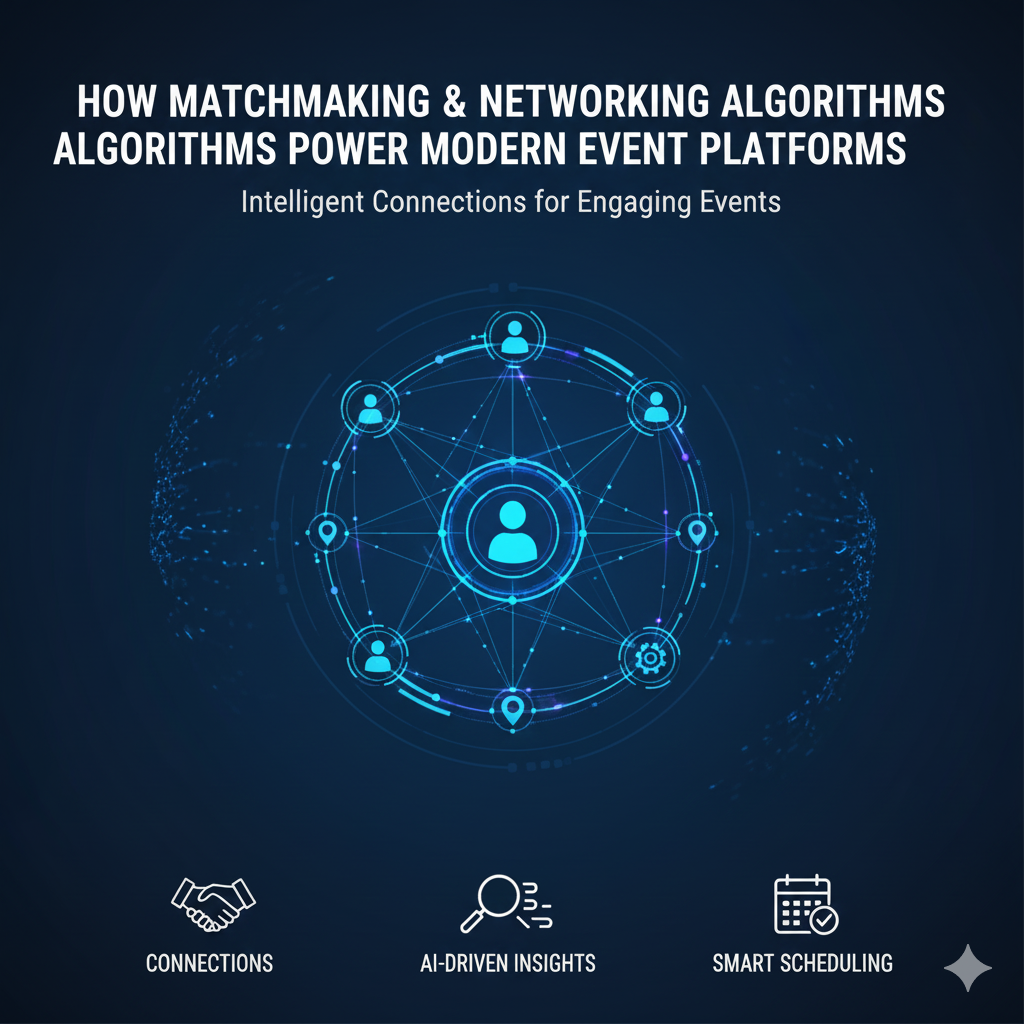
🤝 How Matchmaking & Networking Algorithms Power Modern Event Platforms
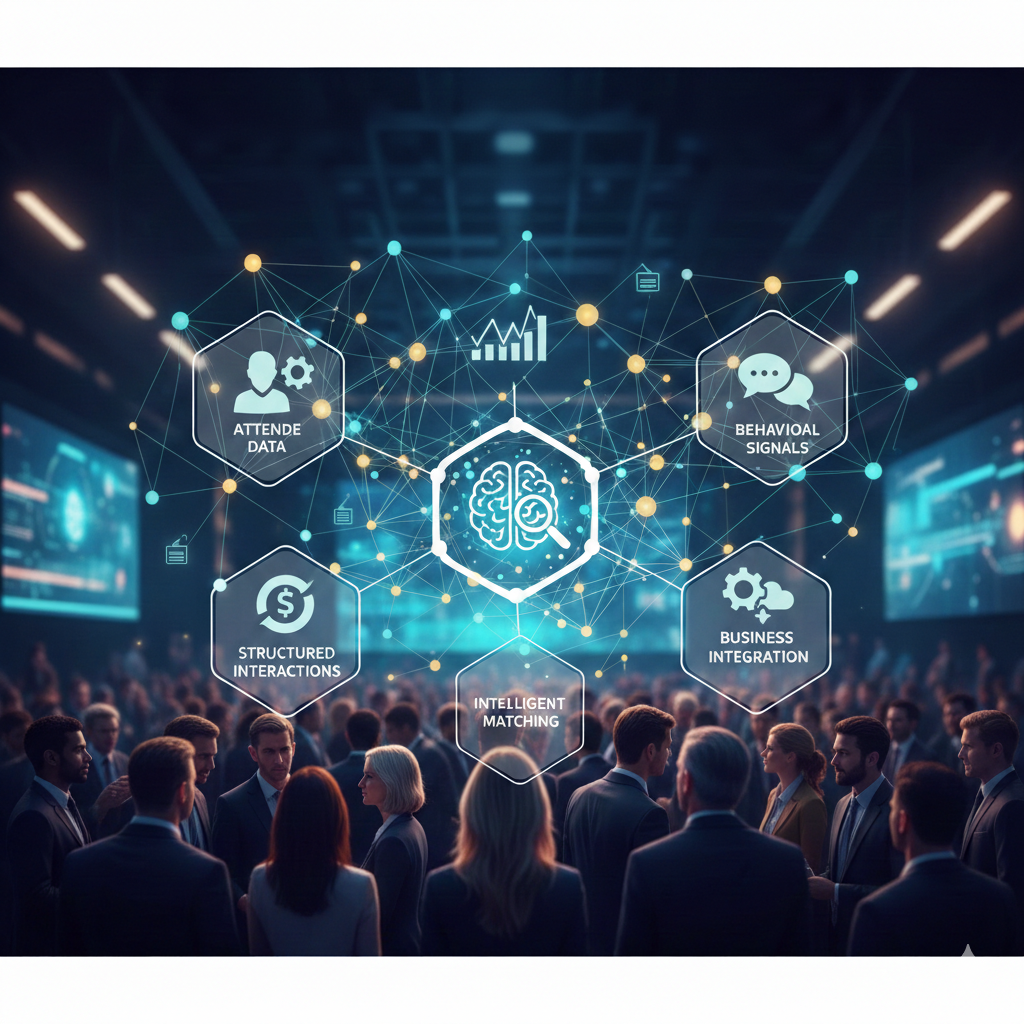
Modern event platforms rely on advanced matchmaking and networking algorithms to reshape how attendees build connections. Rather than depending on random encounters or manual searches, these systems analyze attendee data in real time to suggest high-value connections. The outcome is more meaningful networking, stronger engagement, and measurable event return on investment (ROI) 📈✨.
📊 Data Sources Behind Matchmaking Algorithms
Matchmaking systems are driven by a wide range of attendee and event data, including:
• Professional profiles such as roles, industries, and experience levels 👔
• Stated interests, objectives, and networking goals 🎯
• Registration details and selected sessions 📝
• Behavioral signals like session participation and engagement activity 📡
• Interaction history from previous events 🔁
Together, these data points enable accurate and relevant connection recommendations 🧠🤝.
🧩 Structuring Attendee Profiles for Matching
To support algorithmic matching, attendee information is transformed into structured datasets:
• Interests and goals are weighted based on relevance and intent ⚖️
• Professional attributes are standardized for consistent comparison 📋
• Profiles update dynamically as attendee behavior changes during the event 🔄
This structure ensures recommendations remain timely and aligned with attendee needs ⏱️✅.
🧠 Matching Logic and Recommendation Frameworks
Modern event platforms use a combination of matching techniques, including:
• Rule-based filters for essential criteria such as industry, role, or location 📍
• Compatibility scoring models to rank potential matches ⭐
• Similarity analysis using weighted profile attributes 🔍
• Machine learning models that adapt based on past interactions 🤖
This hybrid approach balances accuracy with flexibility to deliver quality connections 🤝✨.
🤖 Role of Artificial Intelligence and Machine Learning
AI and machine learning enhance matchmaking by uncovering deeper insights within attendee data:
• Identifying patterns that may not be immediately visible 🧠
• Refining recommendations based on acceptance rates and engagement outcomes 📈
• Using natural language processing to interpret free-text bios and interests 🗣️
• Continuously learning across events to improve future matching 🔄
As a result, networking recommendations become smarter over time 🚀.
⏱️ Real-Time Networking Recommendations
Event platforms generate live connection suggestions based on real-time activity:
• Session attendance influences who is recommended 🎤
• Engagement behavior triggers updated match suggestions ⚡
• Timely notifications encourage spontaneous introductions 🔔
This real-time adaptability enables relevant networking moments throughout the event 🌐🤝.
📅 Optimizing Meeting Scheduling and Availability
To increase successful meetings, platforms optimize scheduling through:
• Calendar-based availability matching 🗓️
• Automated suggestions for optimal meeting times ⏰
• Conflict detection and resolution ⚠️
• Intelligent reminders and follow-up automation 🔁
These features reduce scheduling friction and increase completed interactions ✅📈.
🔐 Privacy, Consent, and Attendee Control
Trust is central to effective networking, which is why modern platforms prioritize:
• Attendee-controlled privacy and opt-in settings 🛡️
• Secure data management and regulatory compliance 🔒
• Transparent explanations of how matches are generated 📖
• Options to refine or disable recommendations ⚙️
Clear consent and data control drive higher participation and confidence 🤝.
🎯 Benefits for Attendees
Intelligent matchmaking delivers clear advantages for attendees:
• More relevant and valuable professional connections 🤝
• Less time spent searching for the right people ⏳
• Higher satisfaction with networking outcomes 😊
• A more productive and engaging event experience 🌟
Attendees focus on meaningful conversations instead of navigation 💬✨.
📈 Benefits for Event Organizers
Event organizers also gain measurable value, including:
• Increased engagement and attendee retention 📊
• Higher participation in networking activities 🤝
• Deeper insights into attendee interests and behavior 🧠
• Clear ROI measurement from networking performance 💼
These insights help organizers improve both current and future events 🔮.
🌍 Common Applications of Matchmaking Algorithms
Matchmaking technology is widely used across event formats, such as:
• B2B conferences and trade shows 🏢
• Startup and investor networking events 🚀
• Career fairs and recruitment programs 🎓
• Hybrid and virtual networking experiences 💻
The algorithms adapt to different event goals and audience types 🎯.
🏁 Conclusion
Matchmaking and networking algorithms are redefining how connections are formed at modern events. By combining structured attendee data, AI-driven intelligence, and real-time behavioral insights, event platforms deliver more relevant and impactful networking experiences. As attendee expectations continue to rise, intelligent matchmaking has become a core requirement for successful events—not just an added feature ⭐🤝.
See more blogs
You can all the articles below







































Ready to Find Your Perfect Solution?
Let us show you how Event Software can transform your events

AI-powered event management platform that helps you create stunning events .