
Supporting High-Concurrency Traffic in Global Events

Supporting High-Concurrency Traffic in Global Events
As events expand globally and adopt digital and hybrid formats, platforms must support extreme levels of concurrent usage without compromising performance. High-concurrency scenarios introduce challenges related to scalability, latency, reliability, and overall user experience. To handle thousands or even millions of simultaneous participants across regions, modern event platforms require resilient architectures and real-time adaptability.
Step 1: Understanding High-Concurrency Event Environments 🌍⚡
• Large volumes of users accessing the platform at the same time 👥📥
• Sudden spikes in traffic during key sessions or major moments 🚀📈
• Global audiences connecting across diverse regions and networks 🌐📍
• Multiple workloads including streaming, chat, and live interactions 🎥💬
• Increased demand on infrastructure and backend services ⚙️🔥
Step 2: Scalable Cloud Infrastructure ☁️📦
• Leverages elastic cloud resources to handle fluctuating demand 🔄📊
• Automatically scales compute, storage, and networking resources 🤖⚙️
• Distributes workloads across multiple regions and servers 🌍🖥️
• Minimizes the risk of overload during peak usage 🚫⚡
• Enables rapid scaling without manual intervention ⏱️🚀
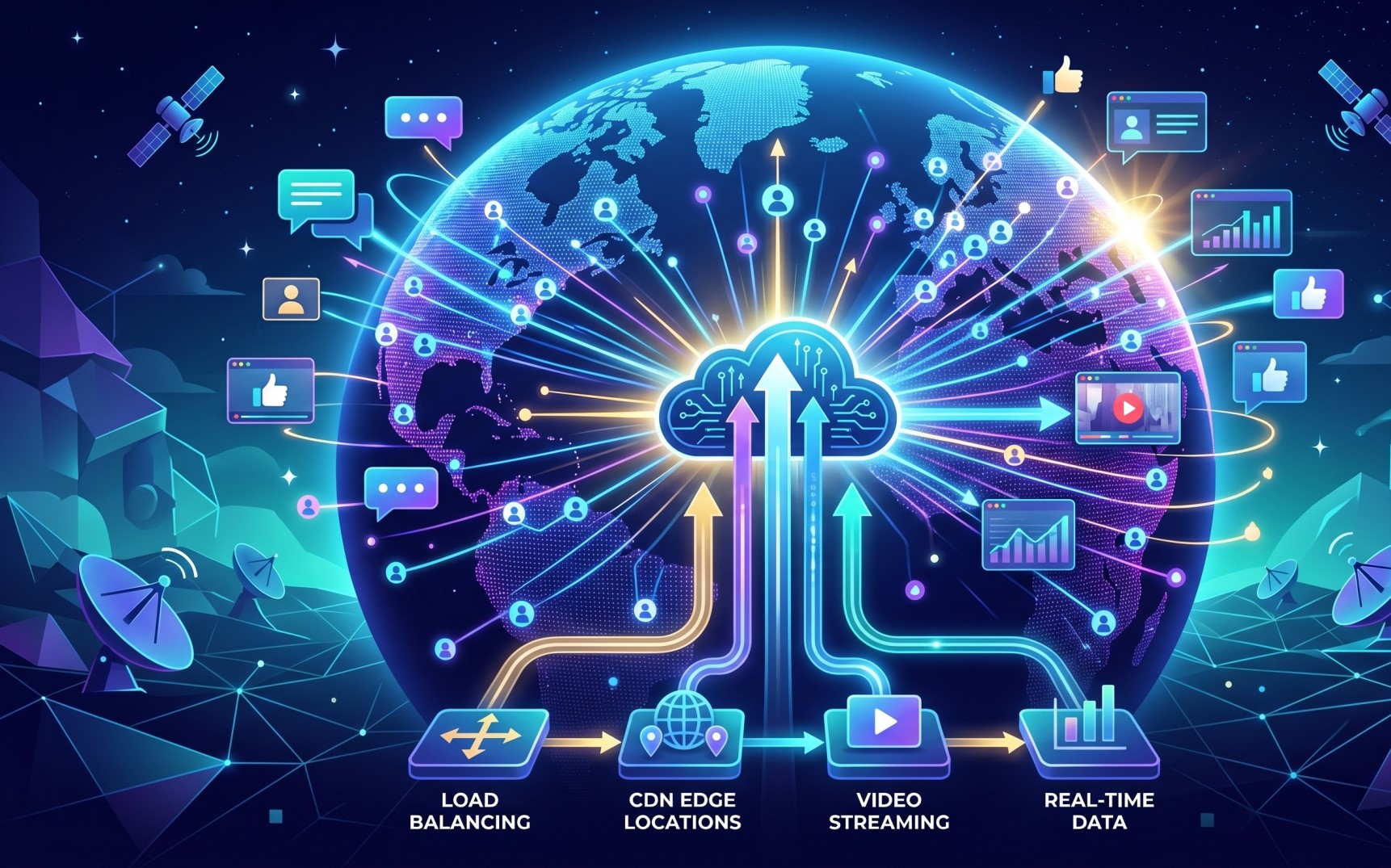
Step 3: Load Balancing and Traffic Distribution 🔀📡
• Spreads incoming requests across multiple systems 🔗🖥️
• Prevents individual servers from becoming bottlenecks 🚫📉
• Enhances availability and system responsiveness ⚡📈
• Supports failover mechanisms in case of failures 🔁🛠️
• Maximizes efficient use of infrastructure resources ⚙️📊
Step 4: Content Delivery Networks for Global Reach 🌐📡
• Delivers content closer to users through distributed edge locations 📍📦
• Reduces latency for users across different geographies ⏱️🌍
• Handles large volumes of simultaneous content delivery 📈📡
• Improves performance for video streaming and asset loading 🎥⚡
• Offloads traffic from core origin servers 🧠📉
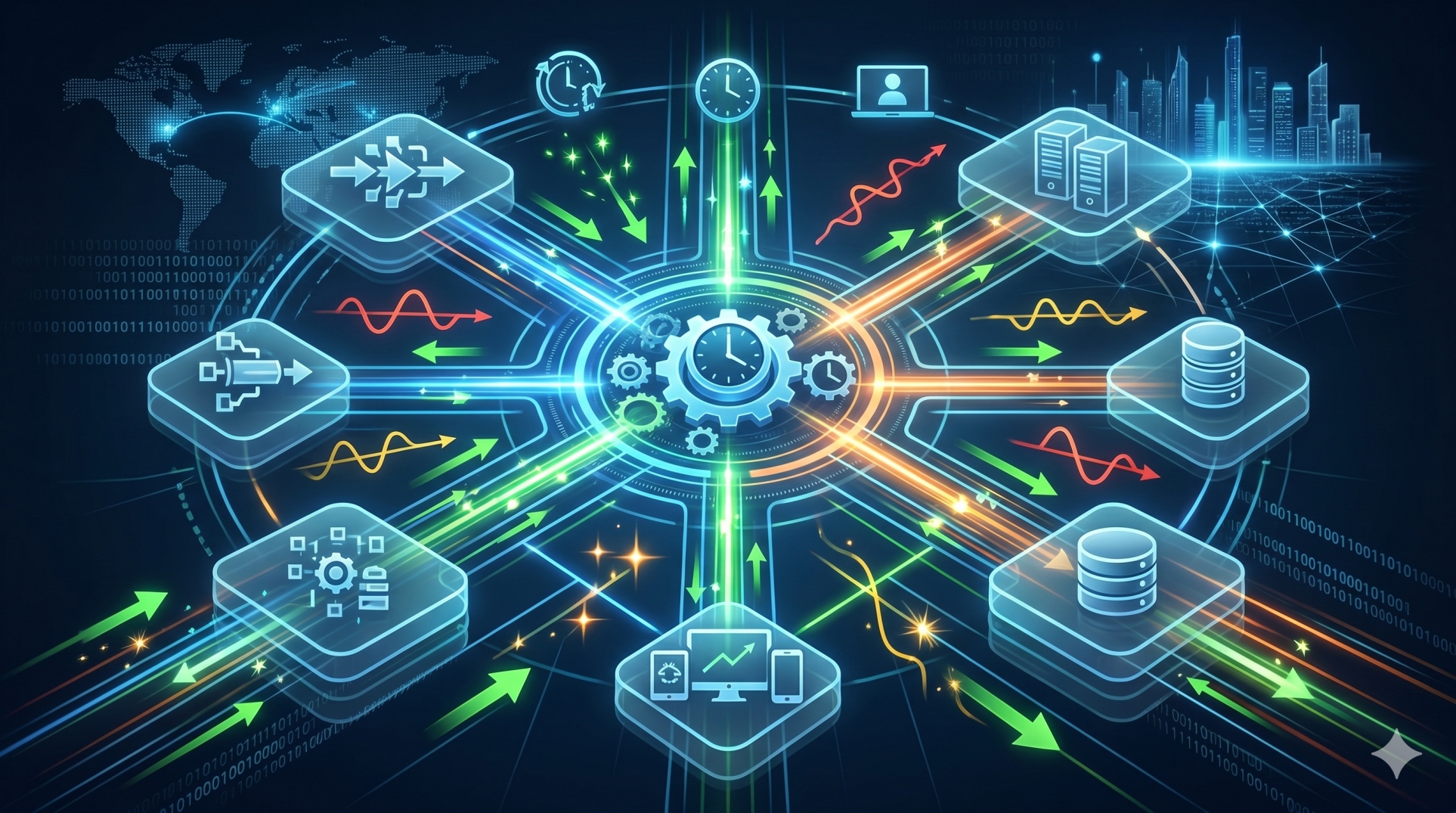
Step 5: Real-Time Data Processing and Streaming 🔄🎥
• Enables live video, chat, and interactive features 🎥💬
• Processes data streams with minimal delay ⚡📊
• Utilizes streaming architectures for continuous data flow 🔁📡
• Keeps participants synchronized during live sessions 👥⏱️
• Sustains engagement through real-time responsiveness 🎯📈
Step 6: Database Scalability and Optimization 🗄️⚙️
• Uses distributed database systems for high data volumes 📦📊
• Implements caching layers and read replicas for efficiency 🔄📚
• Optimizes queries for faster data access ⚡🔍
• Maintains consistency across concurrent operations ✔️🔗
• Prevents database overload during peak activity 🚫🔥
Step 7: Resilience and Fault Tolerance 🛡️🔁
• Builds redundancy across systems and geographic regions 🌍🧩
• Applies failover strategies to ensure continuous availability 🔄⚙️
• Isolates failures to avoid widespread system impact 🚫🌐
• Continuously monitors system health and stability 📊👀
• Ensures smooth recovery without disrupting users 🔧✨
Step 8: Key Performance Priorities Under High Load 🎯⚡
• Maintain low latency and fast response times ⏱️📈
• Ensure platform stability during peak concurrency 🔒📊
• Deliver consistent experiences across all regions 🌍🤝
• Detect and respond to performance issues in real time 🚨⚙️
Step 9: Monitoring, Observability, and Alerts 📊🔍
• Tracks metrics such as latency, throughput, and error rates 📈⚠️
• Provides real-time visibility into system behavior 👀📡
• Detects anomalies and unusual traffic patterns 🚨🔎
• Triggers alerts for performance or availability issues 🔔⚡
• Enables quick diagnosis and resolution of problems 🛠️⏱️
Step 10: Security and Traffic Management 🔐🛡️
• Protects against distributed denial-of-service (DDoS) attacks 🚫🌐
• Applies rate limiting and intelligent traffic filtering ⚙️🚦
• Secures user data and live interactions 🔒💬
• Ensures compliance with global security standards 📜🌍
• Maintains platform integrity under heavy traffic conditions 🏗️✔️
Conclusion
Supporting high-concurrency traffic in global events requires a combination of scalable infrastructure, efficient traffic distribution, real-time processing, and resilient system design. By prioritizing performance, reliability, and global accessibility, event platforms can deliver seamless experiences even under extreme load. Well-architected systems ensure that large-scale events run smoothly, maintaining engagement and trust across diverse audiences worldwide.
See more blogs
You can all the articles below




















































Ready to Find Your Perfect Solution?
Let us show you how Event Software can transform your events

AI-powered event management platform that helps you create stunning events .