Coordinating Multi-Vendor Event Operations Through Digital Platforms
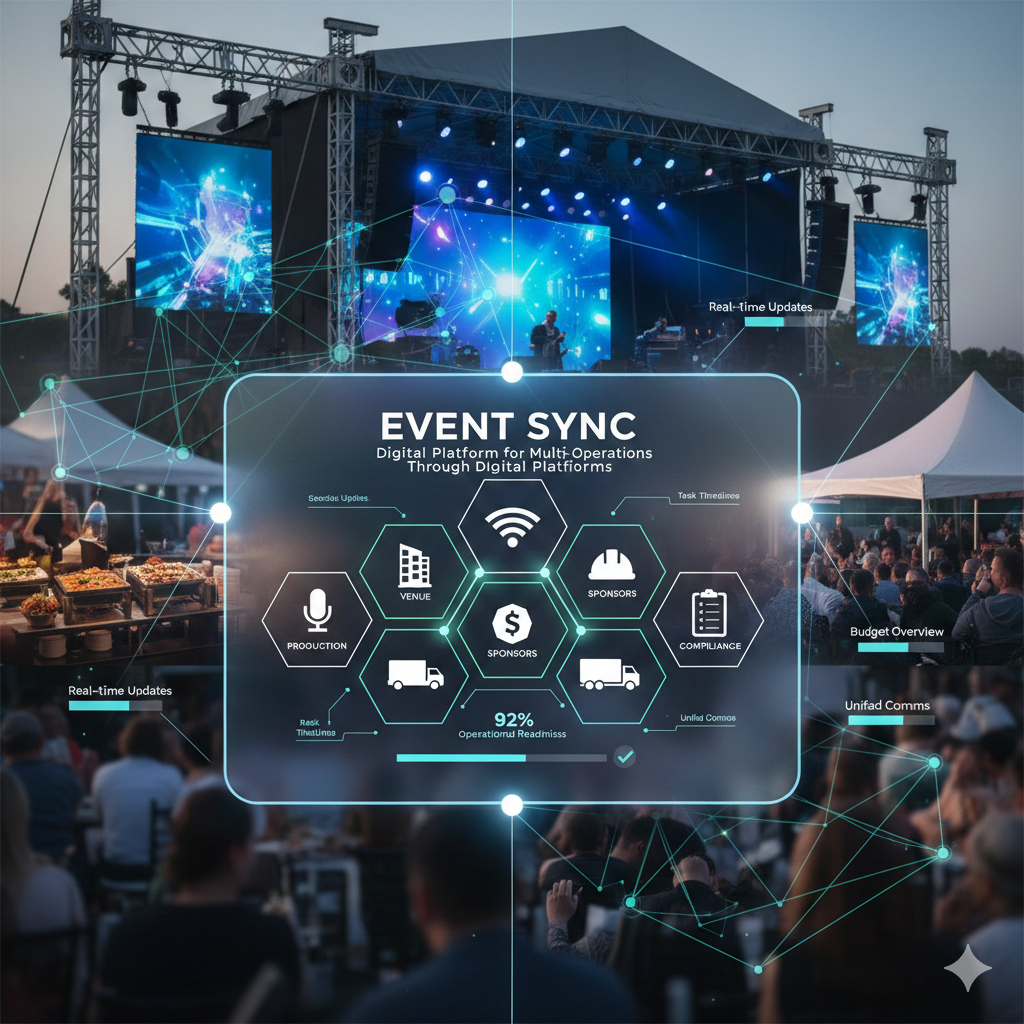
Coordinating Multi-Vendor Event Operations Through Digital Platforms
Modern events depend on an interconnected network of vendors — from production crews and venue partners to technology providers, sponsors, logistics teams, and service contractors. Managing these stakeholders through manual coordination often results in communication gaps, scheduling conflicts, and avoidable inefficiencies. Digital event platforms now act as centralized command systems that streamline collaboration, increase operational transparency, and ensure seamless execution across complex vendor ecosystems.
Step 1: Centralized Vendor Management 🗂️
• Consolidates vendor profiles, documentation, and agreements within a unified system 📁
• Stores contracts, compliance certifications, and key contacts in one secure location 🔐
• Standardizes onboarding procedures across all suppliers 📋
• Tracks responsibilities, deliverables, and timelines clearly ⏱️
• Eliminates reliance on fragmented spreadsheets and email chains 📧
Step 2: Unified Communication Channels 💬
• Enables structured communication across different vendor groups 🧩
• Preserves documented conversations and decision records 📝
• Reduces confusion caused by disconnected messaging tools 🚫
• Supports instant updates and automated notifications 🔔
• Strengthens accountability through transparent collaboration 🤝
Step 3: Task and Workflow Coordination 🔄
• Assigns roles with clearly defined deadlines 📆
• Automates reminders and milestone tracking ⚙️
• Aligns vendor activities with the master event schedule 🗓️
• Visualizes task dependencies across teams 📊
• Minimizes last-minute conflicts and execution risks ⚠️
Step 4: Budget and Cost Visibility 💰
• Monitors vendor contracts and payment timelines 📑
• Tracks budget allocation in real time 📊
• Detects potential overruns before they become critical 🚨
• Supports accurate post-event financial reconciliation 🧾
• Delivers executive-ready budget insights 📈
Step 5: Logistics and Resource Alignment 🚚
• Coordinates equipment delivery, installation, and breakdown schedules 🛠️
• Synchronizes venue access windows and operational timelines 🏢
• Tracks inventory and technical resource requirements 📦
• Prevents duplication, shortages, or misallocation of assets 🚫
• Ensures operational readiness across all production environments 🎛️
Step 6: Compliance and Risk Management 🛡️
• Maintains insurance documentation and regulatory records 📄
• Verifies vendor compliance prior to final approvals ✔️
• Tracks safety measures and contingency planning ⚠️
• Reduces legal and operational exposure 📉
• Documents risk mitigation actions for accountability 🧾
Step 7: Real-Time Operational Oversight 📊
• Provides live dashboards for tracking vendor performance 📈
• Flags missed milestones or delays immediately 🚩
• Enables rapid decision-making during live execution ⚡
• Supports coordination between on-site and remote teams 🌐
• Maintains operational control during high-pressure moments 🎯
Step 8: Strategic Impact of Digital Vendor Coordination 🚀
• Enhances overall execution quality and event reliability 🏆
• Reduces operational risk through structured governance 📋
• Strengthens collaboration across diverse vendor networks 🤝
• Scales effectively as event scope and complexity expand 📦
Conclusion
Coordinating multiple vendors in today’s event landscape requires more than manual tracking and disconnected tools. Digital platforms provide the visibility, structure, and control necessary to manage complex event ecosystems efficiently. By centralizing communication, workflows, financial oversight, and compliance management, organizations can reduce risk, improve execution quality, and ensure smooth multi-vendor coordination from planning through post-event completion.
See more blogs
You can all the articles below




























Ready to Find Your Perfect Solution?
Let us show you how Event Software can transform your events

AI-powered event management platform that helps you create stunning events .