
Software Systems for Academic Conferences

Software Systems for Academic Conferences
Academic conferences have evolved into complex, multi-layered events that require efficient coordination of submissions, reviews, scheduling, and participant engagement. Software systems designed specifically for academic conferences play a crucial role in streamlining these processes, ensuring transparency, and enhancing the overall experience for organizers, reviewers, and attendees. Modern platforms transform conference management into a structured, scalable, and data-driven operation.
Step 1: Managing Paper Submissions and Reviews 📄
• Enable structured paper submission workflows for authors 📥
• Support peer review processes with reviewer assignment systems 🧑⚖️
• Allow blind or double-blind review configurations 🔍
• Track submission status and reviewer feedback in real time ⏱️
• Ensure fairness and consistency in evaluation processes ⚖️
Step 2: Automating Review Workflows ⚙️
• Assign reviewers based on expertise and availability 🎯
• Automate reminders and deadlines for submissions and reviews ⏰
• Detect conflicts of interest in review assignments 🚫
• Enable scoring, comments, and decision tracking 📊
• Reduce manual coordination for program committees 🤖
Step 3: Conference Scheduling and Program Management 🗓️
• Organize sessions, tracks, and presentation slots efficiently 🗂️
• Avoid scheduling conflicts across parallel sessions 🚧
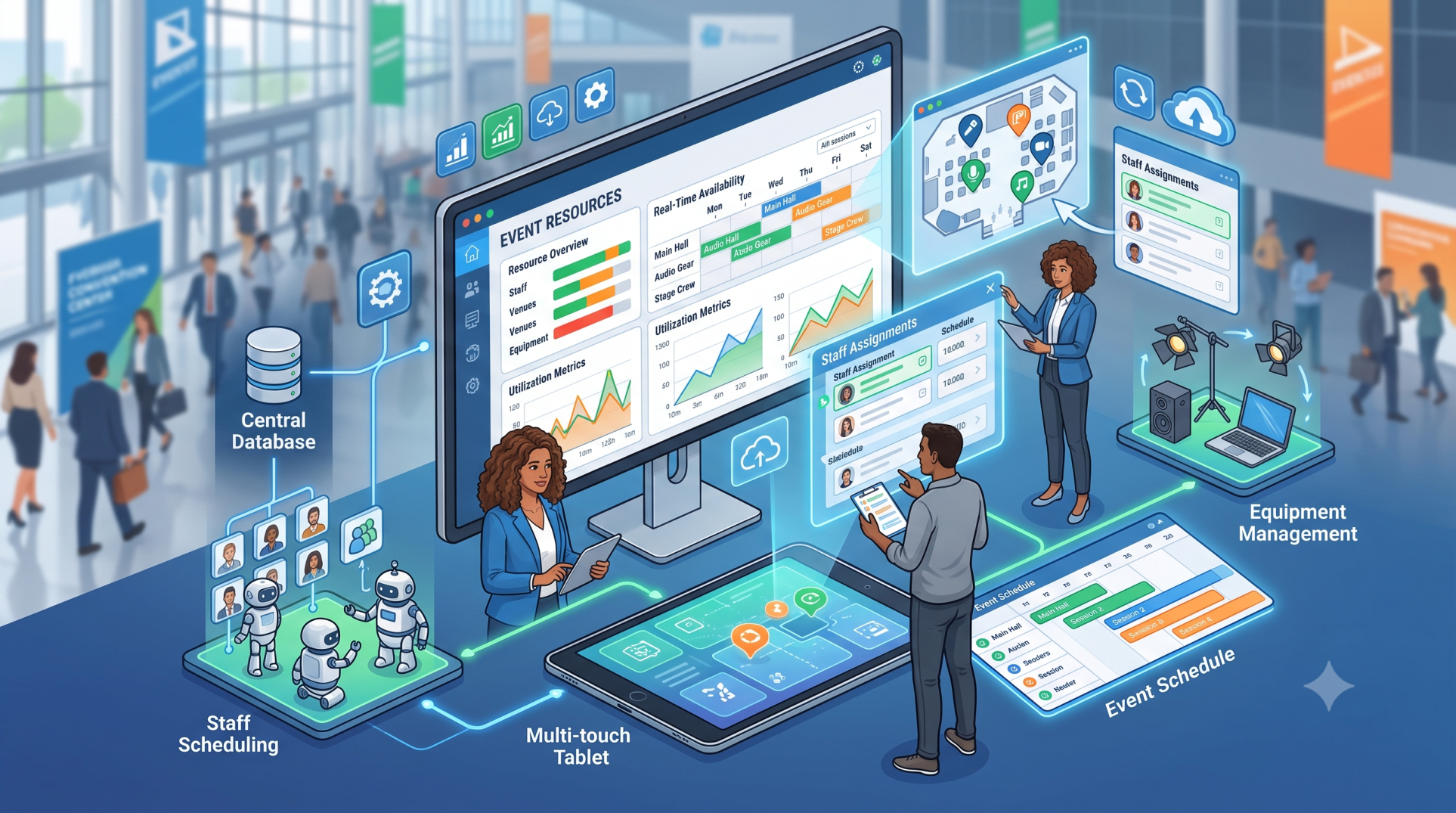
• Generate dynamic conference agendas automatically 📅
• Support hybrid and virtual session planning 💻
• Enable real-time updates to schedules and programs 🔄
Step 4: Attendee Registration and Access Control 🎟️
• Manage participant registration and ticketing systems 🧾
• Support different access levels (authors, reviewers, attendees) 👥
• Enable secure login and authentication 🔐
• Handle payments, confirmations, and invoicing 💳
• Streamline check-in processes for physical events 📍
Step 5: Communication and Collaboration Tools 💬
• Facilitate communication between organizers, reviewers, and authors 📢
• Send automated notifications for deadlines and updates 🔔
• Provide discussion forums or messaging features 💬
• Enable collaboration within program committees 🤝
• Maintain centralized communication logs 📂
Step 6: Virtual and Hybrid Conference Support 🌐
• Enable live streaming and virtual presentation tools 🎥
• Support remote participation for global attendees 🌍
• Integrate video conferencing and webinar platforms 💻
• Provide on-demand access to recorded sessions ▶️
• Ensure seamless experience across physical and digital formats 🔄
Step 7: Data Management and Analytics 📊
• Track submission trends and acceptance rates 📈
• Analyze reviewer performance and workload distribution ⚖️
• Monitor attendee engagement and participation 📊
• Generate reports for organizers and stakeholders 📑
• Use insights to improve future conference planning 🔍
Step 8: Key System Priorities 🧩
• Transparent and efficient peer review processes 🔍
• Scalable infrastructure to handle large volumes 📦
• Real-time visibility into conference operations 👁️
• Seamless user experience for all participants 🎯
Step 9: Handling Exceptions and Workflow Variability ⚠️
• Manage late submissions or review delays ⏳
• Reassign reviewers when conflicts or issues arise 🔄
• Handle session changes or speaker cancellations 🚫
• Ensure system resilience during peak usage 📶
• Maintain operational continuity under dynamic conditions 🔧
Step 10: Building a Future-Ready Conference Platform 🚀
• Design modular systems for easy feature expansion 🧩
• Integrate AI for reviewer matching and content recommendations 🤖
• Support multilingual interfaces for global accessibility 🌐
• Enable interoperability with academic and publishing systems 📚
• Continuously evolve based on user feedback and technology trends 🔄
Conclusion
Software systems for academic conferences are essential for managing the growing complexity of modern scholarly events. By automating workflows, enhancing communication, and providing real-time insights, these platforms enable organizers to deliver efficient, transparent, and engaging conferences. As academic collaboration continues to expand globally, robust conference software systems will play a key role in supporting innovation and knowledge sharing.
See more blogs
You can all the articles below























































Ready to Find Your Perfect Solution?
Let us show you how Event Software can transform your events

AI-powered event management platform that helps you create stunning events .