
Event Data Pipelines for Real-Time Insights
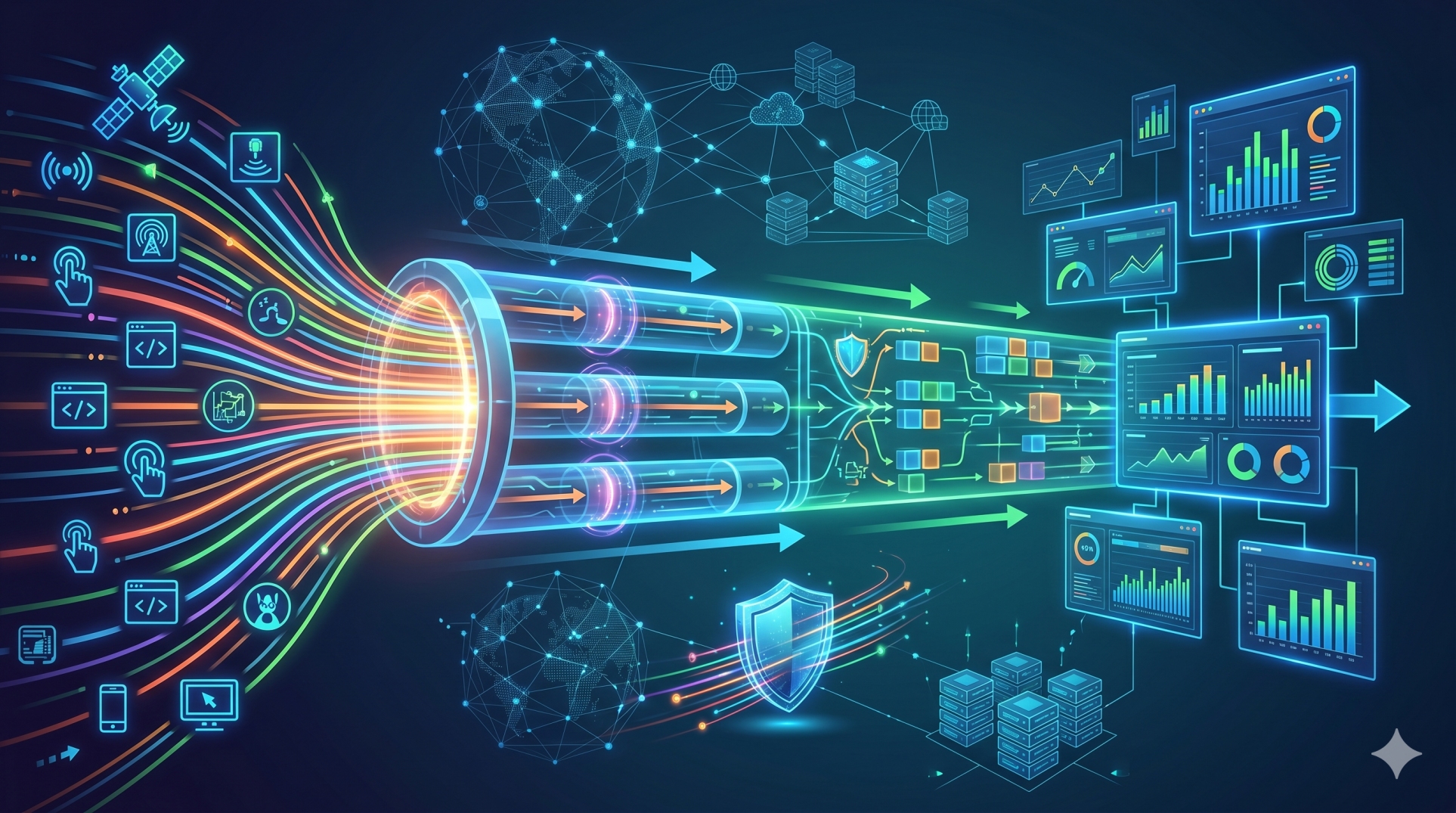
Event Data Pipelines for Real-Time Insights
Modern organizations generate massive volumes of event-driven data from applications, devices, transactions, and user interactions. To transform this continuous flow into actionable intelligence, businesses rely on event data pipelines capable of processing information in real time. These pipelines enable faster decision-making, operational visibility, and responsive automation across dynamic environments.
Step 1: Understanding Event-Driven Data Streams 📡
• Event data originates from applications, sensors, APIs, and user activities
• Events are generated continuously across distributed systems
• Real-time streams provide immediate operational visibility
• Data pipelines capture and process events as they occur
• Event-driven architectures support scalable digital operations
Step 2: Designing a Scalable Pipeline Architecture 🏗️
• Build pipelines capable of handling high-volume event streams
• Use distributed infrastructure for reliability and scalability
• Separate ingestion, processing, storage, and analytics layers
• Ensure pipelines can scale horizontally during peak loads
• Design modular architectures for future expansion
Step 3: Real-Time Data Ingestion ⚡
• Capture events from multiple systems and endpoints simultaneously
• Support streaming protocols and real-time connectors
• Minimize latency between event generation and ingestion
• Ensure reliable event delivery with fault-tolerant mechanisms
• Handle structured, semi-structured, and unstructured data streams
Step 4: Stream Processing and Transformation 🔄
• Process incoming data continuously as events arrive
• Filter, enrich, and transform event streams in real time
• Apply business logic to generate actionable insights instantly
• Detect anomalies, trends, and operational changes dynamically
• Enable event-driven automation across workflows
Step 5: Integrating Real-Time Analytics 📊
• Deliver live dashboards and operational visibility
• Support instant reporting and KPI monitoring
• Enable predictive analytics using streaming data
• Trigger alerts and notifications based on predefined conditions
• Improve responsiveness through continuous insight generation
Step 6: Ensuring Data Quality and Reliability ✅
• Validate incoming events for consistency and accuracy
• Prevent duplicate or corrupted event processing
• Maintain reliable delivery across distributed environments
• Monitor pipeline health and processing performance
• Ensure high availability during system failures or spikes
Step 7: Supporting Low-Latency Decision Making 🚀
• Reduce delays between data generation and insight delivery
• Enable real-time operational adjustments and automation
• Improve customer experience through immediate responsiveness
• Support time-sensitive workflows and critical operations
• Accelerate decision-making across departments
Step 8: Key Pipeline Priorities 🔑
• High-throughput event processing capabilities
• Real-time visibility and analytics integration
• Reliable and fault-tolerant data movement
• Scalable infrastructure for growing data volumes
Step 9: Security and Governance in Event Pipelines 🔐
• Secure event streams with encryption and access controls
• Maintain compliance with data privacy regulations
• Track data lineage and event traceability
• Apply governance policies across distributed systems
• Protect sensitive operational and customer data
Step 10: Building a Future-Ready Real-Time Data Ecosystem 🌐
• Support integration with AI and machine learning systems
• Enable adaptive automation using streaming intelligence
• Expand pipelines as business systems evolve
• Maintain flexibility for new event sources and workflows
• Continuously optimize performance and scalability
Conclusion
Event data pipelines are essential for organizations seeking real-time operational intelligence and faster decision-making. By enabling continuous ingestion, processing, and analysis of streaming data, businesses can respond instantly to changing conditions and improve operational agility. A well-designed event pipeline not only enhances current analytics capabilities but also provides the foundation for scalable, future-ready digital operations.
See more blogs
You can all the articles below

































Ready to Find Your Perfect Solution?
Let us show you how Event Software can transform your events

AI-powered event management platform that helps you create stunning events .